Yup. Writing About Trauma Is Painful.

Yup. Writing About Trauma Is Painful.

I opened my old journal in preparation for working on my memoir this morning. I read dozens of entries. The person who wrote those words is separate from me. Who is this woman? I don’t like her. When I read her words, I hear her voice in my head, and it sickens me. I hate her life — a slow burn. I hate her memories.

I can see it clearly, how it happened—the deterioration of me over time. Sometimes, I feel strong enough to read through my old journal and use the entries to fuel my memoir. Other times, like today, I read it and feel an ache so deep that I can’t stand being present in my body. Unfortunately, I never know which way it will hit me. Every time I dive in, I assume that risk.

The trauma of pregnancy loss and infertility has penetrated my life so that I can’t see an end to the pain. The perpetual strain of this burden has worn my internal brakes to the point that simple reminders can trigger severe internal distress. Of course, my journal is more than a simple reminder. It is alive, rings on my tree trunk that I would like to carve from my experience.

I live two lives, one here with my wife and daughter. And the other with that woman who is burning. That time is not cataloged in the past, where memories belong. Instead, I am still there with her, trying to put out the flames, but they’re never fully extinguished. Just when I think I can step away and leave the past in the past, an ember sparks a tiny flame that grows until I am right back there, holding her until the flame dies out. It will never die out. Maybe I don’t want to stop burning me.

I try to see the mechanisms for what they are – avoidance, anger, shut down, etc. – designed by my body and mind as ways to protect me from a threat. When it comes to pregnancy loss and infertility, daily life bakes in those threats. You don’t have to look hard or go far to find reminders of what you lost.

In writing this memoir, I shine a light on my darkest corners. I expose my rawness and hope that my honesty will resonate with those who need to feel connected in their grief. It took far too long for me to start healing properly and with self-awareness. I want others to benefit from my experience, to see that the cost of living without mental health support is too great. I paid with years from my life.

So this morning, I choose not to write another chapter for my book. Instead, I write this entry to feel alive with who I am in the present. I opened that journal knowing the risk. Still, I can’t simply table this weight for another time by closing my laptop. The heaviness will follow me, making me feel like gravity has increased its force on my body. I will have to work hard to acknowledge the warm sun on my skin as I walk today. But I can persist because I have the right support for the ebbs and flows. Supports that allow me to open my journal, let it hit me, and accept my reaction as valid. I used to hear the echoes and try to drown them. Now, I hear the echoes and listen to what they are trying to tell me as I heal.

Grieving Through Labor Pains

Grieving Through Labor Pains

You can’t become a mother without pain. Even with an easy conception and an exquisite pregnancy, you still must endure labor and delivery. Even with adoption, you must overcome distressing hurdles. It is that simple—first pain, then motherhood. My labor began with my first miscarriage and continued for six years until I landed safely in the United States with my daughter.

The first contraction hits me in my bed, where I wait for the inevitable to begin. Having been told that it may take some time for my body to miscarry, I don’t know what to expect or when to expect it. But I know it when I feel that first cramp. Only, I don’t want to push it out. The mental anguish roars over the physical, like a lion to a house cat.

After the miscarriage, the tightening returns with every period and negative pregnancy test. A pinch comes when our closest friends have their first child. The sting grows with learning that my teenage brother is having a baby, followed by my sister’s unplanned pregnancy shortly thereafter. I silently scream with the pressure but hold my breath instead of breathing through it.

The next round of contractions begins with my second miscarriage. Holed up in the bathroom; it slips from my body despite my clenching.

My labor rolls on for another year:
Every time I stick myself with a needle to assist my failing body.
Every time a nurse ties the tourniquet for another blood test.
Every time I put my feet in the stirrups.
Every time I miss a cycle because my husband is traveling.

Delivery is a moving target, more like a mirage. And so, my labor continues through three years of international adoption. Contractions are a way of life. I didn’t see it at the time, but I was straining—always. My muscles ache as my mind races through a tortuous test of endurance: Through demanding timelines, endless paperwork, and constant financial stress. Through countless examinations to verify my parental fitness as determined by strangers who document my mental and physical health.

I live under a microscope while seeking out stamps of approval. And I wait. And I wait. And I wait, but there is no Pitocin to quicken this labor. No epidural to numb the pain, not without a risk of being deemed mentally unwell by a foreign country, which now holds my chance of a healthy delivery in their hands.

When the plane leaves the runway, I believe this is it. My contractions are productive. When I land in a country on the other side of the ocean, I am fully dilated. It is time to push. When they place her in my arms, my heart explodes. With every visit, my tension melts. I can breathe again. But it strangles me to leave her at the baby house—my oxygen drops between visits.

How can I have held my baby but still be in labor?

Finally, my day in family court arrives. I expect a clean bill of health for mama and baby and a note for discharge. Instead, I enter a living nightmare when they tell me that they cannot approve the adoption at this time. They need time to consider if I am a good match for the baby. And I scream. And I scream. And I scream, through a contraction that lasts for 24 hours, ravaged by relentless, unforgiving pain.

The next day, I grip the courtroom bench, prepared to fight. I am ready to push! My pain subsides as the Judge grants the adoption. I can breathe again, but it is not over. Next, comes the 15-day waiting period.

When I bring my daughter home to the in-country rental where I have lived for two months, I anticipate the next contraction, stiff with worry. I tread cautiously for the remaining days.

When the plane leaves the runway, sweat coats my body and my baby is on my chest. We experience some turbulence but no pain. When we land in the United States, I am ready to see my family. She is here. She is beautiful. And she is mine.

My memoir lives in the moments between the lines above. Six years of labor changed me.

Despite my happy landing, the echoes of infertility reverberate in part because I didn’t allow myself to grieve along the way. Imagine trying to grieve while in labor. For six years, I focused on survival and delivery. You could say I was successful because I have my beautiful daughter. You might even expect me to say that it was all worth it—maybe it was for the best.

But you would be wrong on both counts because this thinking plots my losses as necessary and my journey to motherhood as a linear narrative.

Infertility isn’t linear. It is rife with flash-backs and flash-forwards. Grief isn’t linear, especially when the loss is complicated. And I can’t heal from trauma if I say it was for the best. I tried. I failed and suffered as a result. Telling myself the ends justifies the means stifled my grief by denying the truth. In therapy, I have learned that incredible love and inconceivable pain can coexist. But one doesn’t negate the other; they both deserve my attention.

In sharing my story today, I grieve. I cry. I scream. I laugh. I love. I remember. But most of all, I embrace every woman who is grieving while in labor.

The Inconceivable: Miscarriage and Macaroni Salad

The Inconceivable: Miscarriage and Macaroni Salad

Since I received the bloodwork results, each day is a torturous exercise of waiting for my body to finish the job. After 12 months of trying, we finally had a second conception, only to be met by the same stigmatizing stamp – unviable. My hCG levels are rising, but at an abnormally slow rate. The doctor says another miscarriage is likely. 

Keeping the news of this pregnancy within my immediate family circle has proved both a blessing and a curse. While I will not have to endure the endless retelling of another failure or dodge the pitiful glances, holding this close to the vest makes my loss feel insignificant and stifles bereavement. It’s as if I am grieving alone. 

The annual 4th of July cookout offers the temptation of distraction. And I naively decide to attend. We turn onto my Aunt’s block to find cars lining both sides of her otherwise quiet neighborhood street, forcing us to park only halfway up the hill. My husband engages the emergency brake, removes the key from the engine, and turns his gaze to meet mine, sunglasses shielding his reticent concern. For a moment, we remain in the air-conditioned solace of the car, silently considering the same why. He respects my choice and follows my lead. 

The car door opens to a rush of mugginess and a moment of reprieve, a drop of dopamine triggered by memories of many family BBQs in this space. Sizzles, splashes, and voices sharpen as we approach the house. I push the wooden gate, and its squeaky torque opens to reveal a setting as familiar as the back of my hand. 

An inground pool surrounded by rough cement tile covers the majority of the yard. Any grassy or shady real estate fills in with beach towels and mismatched folding chairs placed by visiting uncles, aunts, and cousins. I see my parents and rush to set our chairs nearby. While my extended family is unaware that I am pregnant, I feel awkward and anxious, thereby adopting my parents as a security blanket for today’s social interactions. 

Changes begin within an hour of our arrival. I am fatigued. The summer air is thick with humidity. My body feels exceedingly heavy. This visit has proved more taxing than I had hoped, and the chore of conversation begins to grate on my nerves. Could this be regret? Is it the heat? In search of an empty chair, I sense a mild cramping and an intense rush of dread. With tunnel vision, I move to the bathroom. 

A smell of grilled meat and chlorine wafts through the open window as I sit on the toilet, understanding the inevitable result of these cramps. Tears slip through my thighs and disappear on the ceramic tiles below, echoing my wish to vanish. Still, there is no escape from the familiar and unwelcome wrenching of my defective reproductive organs.

Each pinch escalates in crescendo with the conversation and laughter coming from the yard, a carefree soundtrack at odds with my reality. My world is coming to an end, trapped in this 8X8 foot prison. Less than a foot of sheetrock and shingles separates my raw ugliness from the family festivities. The mental anguish radiating from within me seems powerful enough to penetrate walls and suck all available oxygen from the air, yet someone just cannonballed into the pool. Anchored to the toilet seat, I lean my upper body to the side and sandwich head to forearm on the vanity’s Formica countertop. My eyes trace the filmy patterns and frosted glass textures on the shower doors. I am miscarrying, and there is nothing I can do to change the setting. 

Why did I come here today? I feel my gut twist with anger, thinking, how could I be so shortsighted? I knew that this could happen at any time in the coming days. The rush of resentment is so intense that I bite my cheek to prevent myself from screaming.

Contractions continue, and my head spins with the impossible task of reconciling the present with the unknown. What if this miscarriage is different from the last? Will the pain be worse? Could I pass out? How long until this is over?  While I know the heartbeat has ceased, I bargain with my body, clench my Kegels, and will my cervix closed to contain the remains until I am home. These efforts in vain, my awareness moves to the slippery release from my vaginal opening, a tiny sack that looks like a large, opaque clot. 

And just like that, I am no longer carrying my child. 

Instead, I am thrust further into a black hole where opposite forces compete to tear me apart. Assaults of intimacy and exposure, love and loathing, pain and numbness overwhelm my nervous system. While the physical pressure relents, emotional pain continues to crush me. Dead inside, my heart goes on beating. It could stop right now; I am not afraid to die. Either there is a Heaven where my angels wait, or there is nothing, and I will not know the difference. Undoubtedly, Hell is here and now, on Earth, and I want out. 

Upon standing, there is a surge of panic that comes with realizing that my baby is in the toilet. Privacy buffered my first miscarriage. I stayed in bed until the cramps insisted I move to the bathroom, where I hovered over my toilet, and the embryo fell into my hands.

I missed the catch this time. I can’t flush! 

Having lost all track of time, I am not sure how long I have been in here. There are only two bathrooms. Surely, there’s a line of people just outside the door. Still, I refuse to consider flushing my baby like a dead goldfish. Peering out the window, I search the yard for a lifeline. My mom is sitting within earshot. I call to her, mustering composure and courage while convincing myself that for all anyone knows, I need a tampon. 

She arrives with a knock, and I open the door just enough to allow her to slide sideways into my Hell. With the door closed, she surveys the scene. There is a potent mix of urgency and fear behind her eyes. “I just lost the baby!” I sob. Eager to stop my ache and in search of a salve, she asks, “What can I do?” I explain that I did not catch it this time; the embryo is in the toilet. 

Without hesitation, my mom plunges her bare hand into the toilet. She is in rescue mode. She scoops out the sac and cradles it in her hand. “Is this it?” she asks with innocent desperation. She doesn’t know what to expect, having never miscarried. Still, I can’t help but worry if she is thinking, “This is it.” – a slight twist on the words with an unsettling consequence born in my paranoid fear that she is judging me for being attached to a glob. “Yes,” I quiver and lean on the sink, identifying the amorphous mass as my unborn child. I feel weak and useless as she wraps what should have been my baby in a cotton quilt of toilet paper. 

My mother sees my exposure and blankets me with fierce protection. She receives my vulnerability with unconditional love and preserves my dignity. Her clarity affords a continuance, the chance of goodbye away from here, in a safer space. All I want is to fold into my mother like the embryo folded in the tissue she holds in her hands. 

We spend the next minutes making a plan for how I will transition back to the outside world. I imagine scenarios over platters of burgers and macaroni salad. “Hey, Dawn. It’s so good to see you. What’s new?” I reply, “All is well, besides the fact that I had a miscarriage about five minutes ago in Auntie Linda’s bathroom. Would you please pass the mustard?” 

Inner tantrums continue to erupt, and I force them into hiding, like an inhumane game of whack-a-mole. Despite my burning wish to be invisible, the mirror tells me otherwise. I splash cold water on my blotchy, swollen face to regain composure. Eventually, my longing to make an inconspicuous exit wins out over my tantrums, and I wonder, how has this bathroom gone from prison to sanctuary?  

My mom leaves first and takes the toilet paper cradle with her when she goes. Shutting the door, I push the lock button and realize that I will fall apart again if I linger too long. I blow my nose, stuff some tissues into my pocket, and take one last look in the mirror, whispering to myself, “It is what it is now. You are as composed as you are going to get.” After a few deep breaths, I reach for the worn brass knob, and the lock disengages with a jarring pop, as loud as a starting gun, that signals my exit. I cross the threshold to the hallway with a nod to the tectonic shift that has occurred within me: physical, mental, and emotional terrains reshaped.

The creak of the screen door seems louder now, heralding my reentry to the yard. Scanning for my husband, I try to look confident despite a weighted cloak of shame. I approach with one last hard swallow and prepare my brief. “It just happened,” I tell him. No other words are needed. No other words are possible. Mentally and physically posturing for control over the threatening quivers, I assert, “Let me be for a while.” 

As we prepare to leave, my mom signals to her purse in reply to the question behind my eyes. My heart, torn from my body, now rests in the faux leather bag sitting on her lap. The juxtaposition of that toilet paper cradle set atop her make-up and wallet seems ludicrous yet somehow comforting. Steadfast in her role as my shield, she will bring the remains home. Together, we will bury my second baby with the first. 

Any other day a goodbye would be just that, punctuation at the end of a visit with a hug and some pleasant talk of next time. Today, the process of leaving muddles with the recognition that this place will never be the same for me. The reel of fond childhood memories flickers in my head while I gather my belongings: a red split level home, the musty smell of the wood-paneled basement, countless sleepovers, my cousins’ staple diet of cheese and mustard sandwiches, festive family get-togethers where all that mattered in the world was endless play and popsicles. It was here that I found my courage to swim in the deep end and jump from a diving board for the first time.

These memories slip between my hands with the latch on the gate as I exit the yard, estranged by trauma.

Echoes of Infertility: Common and Normal Are Not the Same

Echoes of Infertility: Common and Normal Are Not the Same

It has been about a week since I miscarried. My husband and I listen hopefully as the OBGYN slides pamphlets across the massive walnut desk in his office. He’s sharing statistics about miscarriage, a flood of facts and percentages intended to assuage. He explains that miscarriage is not uncommon, and most women go on to have successful pregnancies on their next try. My reproductive signposts suggest no cause for concern at this point. “You can try again after one regular menstrual cycle.” His tone is confident, believable. “I will see you in my exam room very soon for your first prenatal visit.” And he sends us on our way to follow that trajectory. There are no referrals for counseling, no real conversations, or follow-ups on my mental wellbeing. They treat nothing about this loss as such. Instead, my miscarriage presents a hurdle with a high probability that I will stick the landing and keep running on the other side. I latch onto the hopeful prognosis, but the story is not to be my own.

What doctors need to understand is that common and normal are not the same. 

Seeking absolute reassurance that I will be one in the vast majority, I read voraciously to confirm these statistics. My teary, bloodshot eyes scan countless pages, aggregating supporting facts. Every article seems to end with encouraging news: one miscarriage is common and not indicative of future infertility. 

As friends and family hear the news, some reach out to share their personal experiences with miscarriage. All of these women, albeit a small sample, have gone on to have successful pregnancies. Conversations are few and mostly promote a future where I will surely give birth. They feed me a desirable script, and I’m starving for this truth. Later, I will come to realize the regret of moving on so quickly. 

What others need to understand is that common and normal are not the same.

Talking about my miscarriage makes my baby real, but sugar-coated discussions feel like a pat on the head when I need a bear hug—my grief muted, stifled by lack of awareness. The emotional tremors continue in aftershocks; vibrations only magnify with days, weeks, and months, and negative pregnancy tests. Eventually, cracks bleed to the surrounding ground, threatening anyone in my company. Relationships sift through tiny fissures in my wellbeing. 

One of my closest friends finds out she is expecting just after I tell her that I am pregnant. At first, we’re excited to imagine our children of the same age, destined to be best buddies. Later, her joy becomes an unfortunate trigger for my sadness. The cruel randomness of this loss blinds me. As the months pass, her belly extends with life, and my hope shrivels with failed conceptions. I am marked, angry, and losing my ability to engage with the world authentically.

What I did not understand is that common and normal are not the same.

Swallowed by unresolved grief, I begin to free fall in a bottomless pit until almost one year later when a test reveals two pink lines, a brief respite. I believe, with cautious optimism, that the timing is significant. At that point, still attached to faith in God, I project purpose onto the wait. I am finally pregnant, almost one year to the day of my first miscarriage, which has to be a sign. I feel overjoyed, relieved, and blessed until awareness slaps me. Pregnancy doesn’t equal childbirth. The reality stings. I hesitate as if I am covering my eyes while peering through the cracks between my fingers. I shared the news of my first pregnancy openly from the moment of the double line result. This time, there is distrust in my body, and I keep this news within my immediate circle.

Due to my recent medical history, the doctor orders early bloodwork. Apparently, a miscarriage combined with a year of unsuccessful attempts to conceive puts me in a new bracket. I am an outlier, no longer tucked into the average statistical curve. This pregnancy was at risk from the moment of conception. 

I enter the blood lab in a haze of worry and desire. The technician asks a few questions to confirm my identity. I meet her gaze with a silent plea, tell me that everything is going to be okay. As she ties the tourniquet, I choke back tears, embarrassed to lose control in front of strangers. She smiles, pokes my vein, and tells me to relax my fist. Seconds later, she separates the vile from the needle and places my sample on the pink Formica countertop. A container of no more than a couple of ounces holds lifesaving or wrecking potential. 

The call comes later that day, and my blood reveals the awful truth. I will lose this baby too. Despite my cautioned stance, I collapse into heaving sobs, flattened by the news. The resentment for my body multiplies to intolerable levels within seconds. I manage to call my husband and parents, who immediately come to my side. Despite their physical proximity, they can’t see the profound internal shift of this quake or the darkness that dampens my mind. 

Life taunts me as I wait two weeks for cramping to signal the impending release. This is not normal. It never was. But now, it is also uncommon.

Maybe It Was for the Best: A Memoir in Progress

Maybe It Was for the Best: A Memoir in Progress

I expect sadness. I accept sadness. I embrace sadness. I want to let go of The Other.

In therapy and writing my memoir, I dive into the cold, dark, and choppy waters of disenfranchised grief. A vast ocean where the ugliest swells rise from a potent mix of emotions other than sadness: Anger. Resentment. Self-loathing. Betrayal.

The Other is unpredictable, yet it has been with me for decades. I hate it, yet I can’t let it go. It is behind me, yet I can’t close the door. 

The Other approaches with a heady sting.
I find the air pocket.
So many years spent plugging holes,
that’s not why I am here.
I am here to swim in it,
soak in it,
feel it from head to toe,
face the fear.
I have support. 
Fully submerged, I trust I can recover.

It hurts.

Part of my intention for this blog is to invite readers to follow the progress of my memoir. The following is an excerpt from my rough draft. Thanks in advance for taking the time to read a piece of my story.

When Bathrooms Were Just Bathrooms: My Last Moments on Fertile Ground

Two pink lines. Naturally, I am excited to share the news with my one and only mom friend. I want to hear all about what it feels like to be pregnant, and she is thrilled to share. Her joy is palpable. After dinner, Jen and I move to the couch to continue our conversation. I feel a tiny cramp. I have been so hyperattentive to my body that I am convinced that this is just gas, and I ignore the physical sensation. A few minutes later, I feel it again, like a pulse, a sharp but faint sensation that I am unwilling to label as pain. It is likely my bladder, I decide, and I excuse myself to the bathroom.

What is that on the toilet paper?  I tell myself that it must be a fiber pressed into the tissue while simultaneously feeling an ominous wash. I bring the soiled toilet paper closer to my face and examine the speck. It is minuscule, but the contrast of the brownish-red to the white beckons my fear. I gather and flatten a new sheet of toilet paper and dab my vaginal opening. The tissue is clean, no speck of worry. My concern moves to the depths of my consciousness with a hard swallow.

The fear follows me to the couch, where I intend to ignore its company. Unfortunately, my mind is not on board with this plan, especially given the real experience of my friend who sits beside me, ready to share, as good friends do, in whatever way I need.

Jen’s first pregnancy ended in a miscarriage. I am not exactly sure how far along she was at the time, but I remember her sadness. My schema was limited. I did not understand the trauma of pregnancy loss. It seemed more medical than psychological in my naïve and unfortunate perspective. Hence, the intense loneliness understood by many women who live through this experience.

Tonight was supposed to be filled with conversation that connected us through the expected joy of a 9-month journey. Now, I begin to contemplate the possibility that we may become connected by the unexpected trauma of miscarriage. Still, I can’t come out with it, the words will make it real, and I want to believe that this worry is another side effect of my neurotic personality or obsessive thinking. Instead, I gently sprinkle a question or two in hopes of easing my elevated stress level. “When did you first think that there might be something up with your first pregnancy?” I ask with my heart in my throat. It’s a risky move, letting my anxiety lead this train to another station. Jen raises her eyes to meet mine, but I realize she won’t ask me why. She is compassionate and open, a true friend who knows when a question needs a simple, direct answer without follow up. She is letting me know that she is there to support me without pressure. “I felt some strange cramping sensations, and then there was a little spotting.”

A squeeze in my heart follows with a pulse that radiates from my chest and into my arms. I am sitting solidly on the same couch, yet it feels like a roller coaster drop. I contain my reaction and try to maintain a calm exterior. Anything else will open the flood gates and sweep my thoughts into negative swirls. Worry is familiar. My mind has been overwhelmed with fear since childhood. I categorize this fixation as an irrational, compulsive thought pattern. It was a fiber; there was no spotting on the second wipe. You are fine.

Bathrooms are for torture. In these tiny spaces, often the smallest room in a home, I have lost my sense of self. Showers are for sobbing, ugly sobs that shake my body while the steam attempts to unblock my swollen sinuses. Medicine cabinets are for pills, vials, tests, and chemicals to assist my failing body. Red plastic sharps containers live next to a wastebasket filled with negative tests and discarded tampons. Mirrors reflect my naked body, perfectly intact and unremarkable on the outside, vacant and inconceivable on the inside. Toilets are for urinating onto sticks and catching my unborn. Bathrooms are pressure-filled spaces tiled in clots, fluids, blood, tissue, and confusion.

This is the day that infertility transformed the bathroom, the day I became an unprepared and unwilling character, attached to this forced revision of my reproductive story. 

The next morning, I wake to immediate dread. What will I see when I wipe? I want to relieve myself of this negative swirl, and the only way to do that is to confirm with a clean toilet paper wipe. Urinate, dab, and check. There it is again. I can no longer call it a fiber. This morning it is most definitely a spot.

Time’s Up, Period: Grief, Infertility, and Menopause

Time’s Up, Period: Grief, Infertility, and Menopause

I am peri-menopausal. For most, this seals the reproductive door; only my door was boarded up long ago, marked uninhabitable. 

Despite my infertility, I have always had a consistent, predictable menstrual cycle—another reason behind the shock of it all. I have come to consider my period a cruel reminder. Why should I have to suffer through the physical and mental cycles when I never got to reap the benefits? 

My body continues in an unremarkable nature to herald the change, as I will soon turn 45. My periods are changing, and my hormones are in flux. It is like puberty all over again, as expected. However, the approach of menopause brings one surprising side effect: a return of my pregnancy dreams. 

I am nine months pregnant, due any day now, but I look down to find no visible pregnancy signs. No skin stretched tight around an extended middle. No swollen breasts, preparing to nourish. No movement from within to remind me of a human life umbilically connected. Pleasure and panic meld into a singular emotion while I try to convince myself that everything is just fine. Suddenly, I am in my bed, gripping sweaty sheets as I wake to the vacancy in my uterus. Struck by an urgency to hold onto hope, I transition from dream to reality. My arms move through the nothingness and collapse to my chest. Much like trying to hug a gust of wind, hope disappears. I wring myself tightly, attempting to maintain the presence in my core and will myself back into the dream where, despite the confusion, there is assurance and comfort in my denial. I don’t want to be awake, present in a life where I cannot deny my emptiness.

This recurring dream-wake cycle began in the weeks following my first miscarriage. It continued for six-and-a-half years until I adopted my daughter. In my sleep, I relived the losses countless times. Some dreams replayed the tragedies of my two miscarriages. Other more insidious dreams teased me with storylines where I was healthy and pregnant, at full term, or even caring for my newborn child. These were the dreams that threatened to swallow my will to live. The dreams that made me never want to wake or coaxed me back to sleep in hopes of returning to that alternate reality.

The substance of my current pregnancy dreams is similar. Only this time, the ache has shifted. Today, I am a parent. I am grateful for my incredible daughter. What I have come to understand is that these are separate, parenting, and giving birth. I can do one without the other. I can be awestruck and thankful while feeling dumbstruck and bitter. I can be overjoyed when my daughter calls me “Mama” and overwhelmed when I realize that I will die without giving birth. 

Female infertility, unspecified. 

It has taken me 44 years to stare this diagnosis square in the face. Not by choice. Not because I thought I might still get pregnant, but because I never processed the grief. 

Female infertility, unspecified. I will die without giving birth. Menopause is a billboard on a long, desolate road.

Now entering: Time’s Up, Period.
Population: Irrelevant— you will always feel alone.

My grief is complicated, fed by years of shame. While I grieve two miscarriages, I also grieve for a piece of myself. Pregnancy and motherhood were central to my identity and my life. I never had questions about whether or not I would give birth, but certainty in the essence of my female body. As a child, I sat with my aunt as she breastfed her baby. I mimicked her actions, cradling my Cabbage Patch Doll to my undeveloped chest, and imagined the inevitability of my own milk swollen breasts. I was robbed—the Cabbage Patch doll ripped from my girlish chest. Who gets charged with this aggressive invasion of my womb?

And so, became my life, in contrast, post-miscarriage and living with unexplained infertility, fractured by a deep sense of self-loathing and an intense longing to embrace myself and say, “It is not your fault. You still matter.”

I haven’t yet forgiven my body for this betrayal. But I am finally receiving treatment. Today, I am in therapy and have consistent access to proper mental health care. While I still have ups and downs, progress means gentle undulations instead of steep climbs and slides. As feelings surface, I am better equipped to process the experience. And when I am overwhelmed, I have resources.

Miscarriage and infertility affect everyone differently, but there is ample evidence to validate the inextricable link between mental and physical health. Comprehensive treatment should prioritize a timely, whole-person approach. Anything less is negligent.

To those facing pregnancy loss and infertility: you are not alone. Keep breathing.

To those supporting friends and family experiencing pregnancy loss and infertility: no two people will need the same support, but all will need to feel supported. Keep showing up.

To those treating patients experiencing pregnancy loss and infertility: how are you treating the whole person? Keep improving.

Veiled

Veiled

Mental quivers magnify
the nothingness
empty-handed I enter
over and over
spaces filled with action conversation intention
but I am a ghost
floating through life
of hollow purpose
my paltry presence stirs shame
reinforcing my desire to remain unseen
except
wisdom espies some place inside
where I keep showing up
crossing that threshold
a weary but resolute warrior

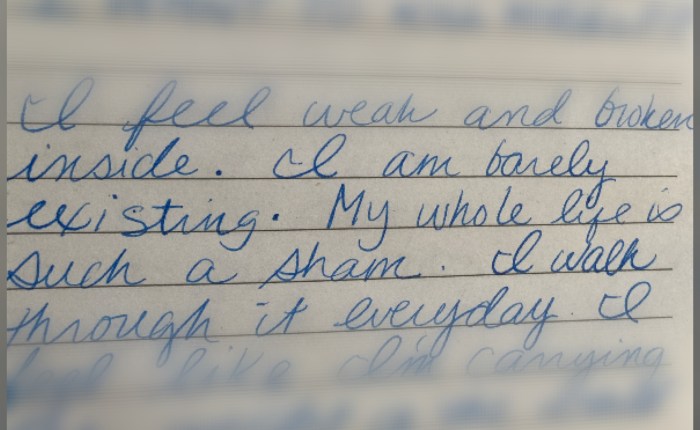
An old journal entry inspired this poetry. Infertility is a constant battle between the will to give up and the will to go on, in every sense. Mental health matters. I came into this experience with a history of anxiety and OCD that followed me from childhood. Still, I have come to learn that even healthy women who experience miscarriage or infertility are at significant risk for developing mental health conditions such as anxiety and depression. One study found that 25% of women satisfied the criteria for PTSD in the months immediately following early pregnancy loss. Left untreated, such conditions negatively impact overall health and quality of life. Another alarming correlation: anxiety and depression may decrease the effectiveness of assistive reproductive technology. Given research highlighting the link in both directions, mental health should be an absolute priority in ongoing and aftercare. In sharing my story, I hope to campaign for others.

Losing My Innocence: A Prologue

Losing My Innocence: A Prologue

I was seven years old when first charged with the responsibility of protecting my family from impending doom. My petite frame bore the continual weight of preventing our three-bedroom cape from burning to the ground. Crouched on the floor, nightly, I stretched my torso to reach my hands toward the electric baseboard heaters, moving under, behind, and between furniture, scraping at the rug to gather lint and any other particulate that would surely ignite into flames while we slept, if not removed. 

I carefully scanned for tiny, troublesome specs with my body in a twisted child’s pose and face pressed against the carpet’s short pile fibers. Then, making my way through the house, I followed the perimeter of each room to inspect other baseboard heaters for possible danger. More than a bedtime routine, this was my duty to keep us safe. At times, I’d forget to check the heaters. Upon realization, and I always realized my mistake at some point in the night, I would shoot from bed in a panic. My heart beat so hard and fast that the cotton nightgown bounced on my chest. With a surge of fear, I launched myself downstairs through a haze of frustrated exhaustion to check the perimeter of any accessible room. 

This was not my first obsessive thought or compulsion. Although, I cannot recall precisely when the safety latch disengaged, flooding my amygdala with alarm. What I remember is a desperate struggle to cope with uncertainty. From my perspective, the world was unsafe, and my family was at risk. I experienced life on overdrive in a constant state of fight or flight. As a result, I did what I could to fix the outcomes and maintain a sense of control.

My parents and siblings watched me engage in such routines, and while I didn’t try to hide my actions, I felt the absence of their reactions. I understood my behavior as necessary; they perceived it as voluntary. I felt hostage to the urge; they thought I would grow out of it. I could not ask for help; they didn’t know I needed it.

Always a fearful child, I was scared of sirens, my nana’s junky car, strangers, raccoons, and needles. This ever-growing list still appeared within developmental norms. At some point, the pitch of my anxiety changed, laced with heightened intensity and frequency. I worried that the tub would overflow, and the water would reach the ceiling causing me to drown. My bed was no longer a place of rest. Each night, I battled incessant morbid thoughts of being buried alive and suffocating in a coffin.

Shame prevented me from sharing my thoughts. Instead, I reported these to my parents as stomach aches. With a kiss on the forehead, I was promptly sent back to bed, where I waited for sleep to rescue me from my overactive mind. 

The earliest ritual stemmed from a prevailing ominous feeling. My mind convinced me that something terrible would happen if I don’t do this. To which I refused to get out of the tub without dipping my bottom successively, three taps, into the water. At the time, my mom saw this as peculiar but not worth denying, so this ritual met my compulsive needs without interference. 

In my climb through adolescence, the if-then contingency grew specific to suggest, someone I love might be hurt, sickened, or die if I don’t do this. And a new ritual emerged to manage this worry. Every time I tore paper towels or toilet paper from a perforated edge, the corners had to be perfectly square. If the corners did not meet this criterion, I would continue to tear pieces until I met the self-prescribed measure. Occasionally, I was relieved when it happened on the first or second try. Other times, I frantically tore through an entire roll of toilet paper for this cause. 

Over time, I became increasingly overwhelmed, trapped by my private, rule-bound grasp for control. While I recognized these routines as irrational, I continued to feel a tremendous burden and responsibility to follow through. 

As an adult, I sought therapy and developed coping techniques that allowed me to reduce the multitude of rituals. Finally, only a solo act remained–a prayer-based ritual. 

Growing up as practicing Catholics, we attended church every Sunday, a dreaded chore. Still, I found some comfort in considering messages of love and protection. From here, I developed my longest ongoing compulsion in a self-authored prayer. It protected anyone I named. I used it prolifically to assert control whenever separated from a loved one, even on short trips to the grocery store. In these words, I called upon God and St. Christopher, the patron saint of travel. To this day, I won’t wholly reveal this routine, as I still use it at times, and exposure may revoke its power to diminish my anxiety. 

Despite therapy and success with reducing compulsive behavior, my obsessive thoughts and anxiety were not budging. I had spent my entire life worrying about what might happen. My mind, a perpetual choose your adventure novel, only I always had to opt for the lesser of two evils. 

Given my propensity for drafting the worst-case scenario, it is shocking that I never considered myself at risk of pregnancy loss or infertility. Somehow, my original reproductive story remained intact. The certainty of growing a life inside of me, untouched by “what ifs.” Actuality disoriented me such that I could not trust anyone or anything, least myself. 

There were no real conversations about this trauma’s depth, no mental health counselor on my medical team. Just bereavement stunted by a recurring theme often prefaced with two words that I have come to despise: AT LEAST. “At least it was early in your first trimester. At least you know you can get pregnant. At least you have good health insurance. At least you didn’t need a D & C. At least you’re still young.” Comparison has no place in the grieving process.

Left with that one ritual, I clung to God in prayer, my earlier journal entries fraught with pleas to heaven. But no ritual is powerful enough to bear the weight of the layered losses of miscarriage and infertility. Eventually, I found that no amount of repetition would protect me from the darkness, isolation, and echoes in the resulting chasm.

I could not ask for help; they didn’t know I needed it.

I spent my entire life worrying about what might happen, using thoughts and rituals as a form of protection and control. If I worry about it, I can prevent it from happening. 

All the while, I neglected to worry about the consequence that would be most profound in carving my world’s internal and external landscapes. A landscape that I am still learning to navigate, even after adopting my daughter.