Grieving Through Labor Pains

Grieving Through Labor Pains

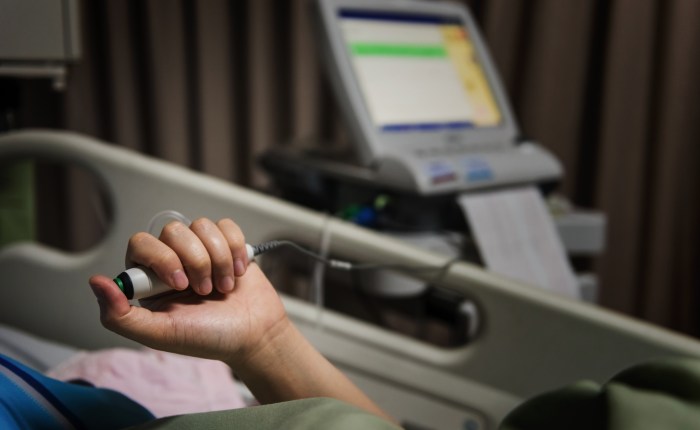
You can’t become a mother without pain. Even with an easy conception and an exquisite pregnancy, you still must endure labor and delivery. Even with adoption, you must overcome distressing hurdles. It is that simple—first pain, then motherhood. My labor began with my first miscarriage and continued for six years until I landed safely in the United States with my daughter.

The first contraction hits me in my bed, where I wait for the inevitable to begin. Having been told that it may take some time for my body to miscarry, I don’t know what to expect or when to expect it. But I know it when I feel that first cramp. Only, I don’t want to push it out. The mental anguish roars over the physical, like a lion to a house cat.

After the miscarriage, the tightening returns with every period and negative pregnancy test. A pinch comes when our closest friends have their first child. The sting grows with learning that my teenage brother is having a baby, followed by my sister’s unplanned pregnancy shortly thereafter. I silently scream with the pressure but hold my breath instead of breathing through it.

The next round of contractions begins with my second miscarriage. Holed up in the bathroom; it slips from my body despite my clenching.

My labor rolls on for another year:
Every time I stick myself with a needle to assist my failing body.
Every time a nurse ties the tourniquet for another blood test.
Every time I put my feet in the stirrups.
Every time I miss a cycle because my husband is traveling.

Delivery is a moving target, more like a mirage. And so, my labor continues through three years of international adoption. Contractions are a way of life. I didn’t see it at the time, but I was straining—always. My muscles ache as my mind races through a tortuous test of endurance: Through demanding timelines, endless paperwork, and constant financial stress. Through countless examinations to verify my parental fitness as determined by strangers who document my mental and physical health.

I live under a microscope while seeking out stamps of approval. And I wait. And I wait. And I wait, but there is no Pitocin to quicken this labor. No epidural to numb the pain, not without a risk of being deemed mentally unwell by a foreign country, which now holds my chance of a healthy delivery in their hands.

When the plane leaves the runway, I believe this is it. My contractions are productive. When I land in a country on the other side of the ocean, I am fully dilated. It is time to push. When they place her in my arms, my heart explodes. With every visit, my tension melts. I can breathe again. But it strangles me to leave her at the baby house—my oxygen drops between visits.

How can I have held my baby but still be in labor?

Finally, my day in family court arrives. I expect a clean bill of health for mama and baby and a note for discharge. Instead, I enter a living nightmare when they tell me that they cannot approve the adoption at this time. They need time to consider if I am a good match for the baby. And I scream. And I scream. And I scream, through a contraction that lasts for 24 hours, ravaged by relentless, unforgiving pain.

The next day, I grip the courtroom bench, prepared to fight. I am ready to push! My pain subsides as the Judge grants the adoption. I can breathe again, but it is not over. Next, comes the 15-day waiting period.

When I bring my daughter home to the in-country rental where I have lived for two months, I anticipate the next contraction, stiff with worry. I tread cautiously for the remaining days.

When the plane leaves the runway, sweat coats my body and my baby is on my chest. We experience some turbulence but no pain. When we land in the United States, I am ready to see my family. She is here. She is beautiful. And she is mine.

My memoir lives in the moments between the lines above. Six years of labor changed me.

Despite my happy landing, the echoes of infertility reverberate in part because I didn’t allow myself to grieve along the way. Imagine trying to grieve while in labor. For six years, I focused on survival and delivery. You could say I was successful because I have my beautiful daughter. You might even expect me to say that it was all worth it—maybe it was for the best.

But you would be wrong on both counts because this thinking plots my losses as necessary and my journey to motherhood as a linear narrative.

Infertility isn’t linear. It is rife with flash-backs and flash-forwards. Grief isn’t linear, especially when the loss is complicated. And I can’t heal from trauma if I say it was for the best. I tried. I failed and suffered as a result. Telling myself the ends justifies the means stifled my grief by denying the truth. In therapy, I have learned that incredible love and inconceivable pain can coexist. But one doesn’t negate the other; they both deserve my attention.

In sharing my story today, I grieve. I cry. I scream. I laugh. I love. I remember. But most of all, I embrace every woman who is grieving while in labor.


Losing My Innocence: A Prologue

Losing My Innocence: A Prologue

I was seven years old when first charged with the responsibility of protecting my family from impending doom. My petite frame bore the continual weight of preventing our three-bedroom cape from burning to the ground. Crouched on the floor, nightly, I stretched my torso to reach my hands toward the electric baseboard heaters, moving under, behind, and between furniture, scraping at the rug to gather lint and any other particulate that would surely ignite into flames while we slept, if not removed. 

I carefully scanned for tiny, troublesome specs with my body in a twisted child’s pose and face pressed against the carpet’s short pile fibers. Then, making my way through the house, I followed the perimeter of each room to inspect other baseboard heaters for possible danger. More than a bedtime routine, this was my duty to keep us safe. At times, I’d forget to check the heaters. Upon realization, and I always realized my mistake at some point in the night, I would shoot from bed in a panic. My heart beat so hard and fast that the cotton nightgown bounced on my chest. With a surge of fear, I launched myself downstairs through a haze of frustrated exhaustion to check the perimeter of any accessible room. 

This was not my first obsessive thought or compulsion. Although, I cannot recall precisely when the safety latch disengaged, flooding my amygdala with alarm. What I remember is a desperate struggle to cope with uncertainty. From my perspective, the world was unsafe, and my family was at risk. I experienced life on overdrive in a constant state of fight or flight. As a result, I did what I could to fix the outcomes and maintain a sense of control.

My parents and siblings watched me engage in such routines, and while I didn’t try to hide my actions, I felt the absence of their reactions. I understood my behavior as necessary; they perceived it as voluntary. I felt hostage to the urge; they thought I would grow out of it. I could not ask for help; they didn’t know I needed it.

Always a fearful child, I was scared of sirens, my nana’s junky car, strangers, raccoons, and needles. This ever-growing list still appeared within developmental norms. At some point, the pitch of my anxiety changed, laced with heightened intensity and frequency. I worried that the tub would overflow, and the water would reach the ceiling causing me to drown. My bed was no longer a place of rest. Each night, I battled incessant morbid thoughts of being buried alive and suffocating in a coffin.

Shame prevented me from sharing my thoughts. Instead, I reported these to my parents as stomach aches. With a kiss on the forehead, I was promptly sent back to bed, where I waited for sleep to rescue me from my overactive mind. 

The earliest ritual stemmed from a prevailing ominous feeling. My mind convinced me that something terrible would happen if I don’t do this. To which I refused to get out of the tub without dipping my bottom successively, three taps, into the water. At the time, my mom saw this as peculiar but not worth denying, so this ritual met my compulsive needs without interference. 

In my climb through adolescence, the if-then contingency grew specific to suggest, someone I love might be hurt, sickened, or die if I don’t do this. And a new ritual emerged to manage this worry. Every time I tore paper towels or toilet paper from a perforated edge, the corners had to be perfectly square. If the corners did not meet this criterion, I would continue to tear pieces until I met the self-prescribed measure. Occasionally, I was relieved when it happened on the first or second try. Other times, I frantically tore through an entire roll of toilet paper for this cause. 

Over time, I became increasingly overwhelmed, trapped by my private, rule-bound grasp for control. While I recognized these routines as irrational, I continued to feel a tremendous burden and responsibility to follow through. 

As an adult, I sought therapy and developed coping techniques that allowed me to reduce the multitude of rituals. Finally, only a solo act remained–a prayer-based ritual. 

Growing up as practicing Catholics, we attended church every Sunday, a dreaded chore. Still, I found some comfort in considering messages of love and protection. From here, I developed my longest ongoing compulsion in a self-authored prayer. It protected anyone I named. I used it prolifically to assert control whenever separated from a loved one, even on short trips to the grocery store. In these words, I called upon God and St. Christopher, the patron saint of travel. To this day, I won’t wholly reveal this routine, as I still use it at times, and exposure may revoke its power to diminish my anxiety. 

Despite therapy and success with reducing compulsive behavior, my obsessive thoughts and anxiety were not budging. I had spent my entire life worrying about what might happen. My mind, a perpetual choose your adventure novel, only I always had to opt for the lesser of two evils. 

Given my propensity for drafting the worst-case scenario, it is shocking that I never considered myself at risk of pregnancy loss or infertility. Somehow, my original reproductive story remained intact. The certainty of growing a life inside of me, untouched by “what ifs.” Actuality disoriented me such that I could not trust anyone or anything, least myself. 

There were no real conversations about this trauma’s depth, no mental health counselor on my medical team. Just bereavement stunted by a recurring theme often prefaced with two words that I have come to despise: AT LEAST. “At least it was early in your first trimester. At least you know you can get pregnant. At least you have good health insurance. At least you didn’t need a D & C. At least you’re still young.” Comparison has no place in the grieving process.

Left with that one ritual, I clung to God in prayer, my earlier journal entries fraught with pleas to heaven. But no ritual is powerful enough to bear the weight of the layered losses of miscarriage and infertility. Eventually, I found that no amount of repetition would protect me from the darkness, isolation, and echoes in the resulting chasm.

I could not ask for help; they didn’t know I needed it.

I spent my entire life worrying about what might happen, using thoughts and rituals as a form of protection and control. If I worry about it, I can prevent it from happening. 

All the while, I neglected to worry about the consequence that would be most profound in carving my world’s internal and external landscapes. A landscape that I am still learning to navigate, even after adopting my daughter.